Week 11: Vector Databases
DSAN 6000: Big Data and Cloud Computing
Fall 2026
Vector Spaces: The Geometry of AI!
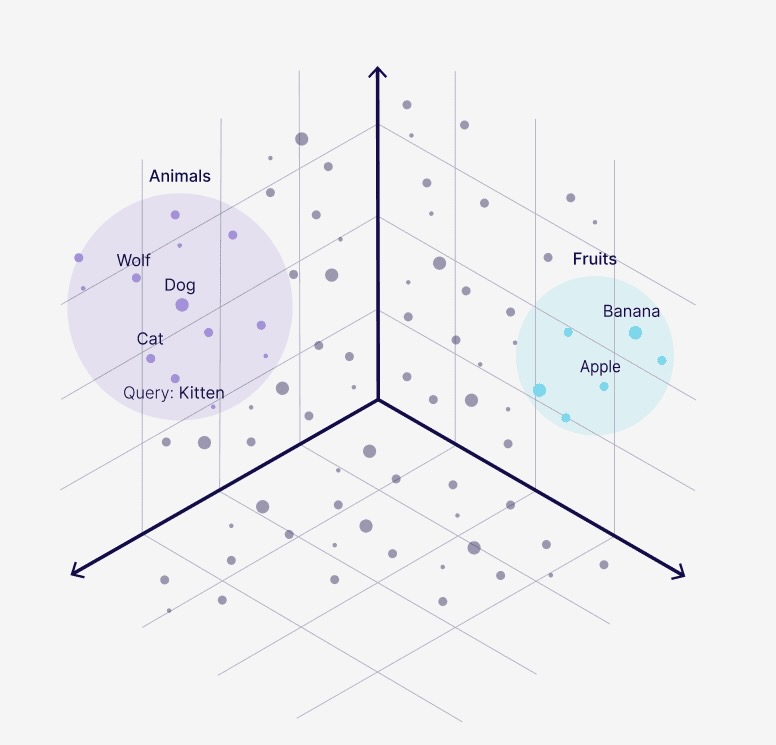
- Why vector spaces over keyword matching?
- What if words have different meanings in different contexts?
Word Counts: Good Enough?
Just four keywords per section:
| Section | Keywords |
|---|---|
| U.S. | state, court, federal, republican |
| World | government, country, officials, minister |
| Arts | music, show, art, dance |
| Sports | game, league, team, coach |
| Real Estate | home, bedrooms, bathrooms, building |
For each article, vote for section with highest keyword count:
| Arts | Real Estate | Sports | U.S. News | World News | Total | |
|---|---|---|---|---|---|---|
| Correct | 3020 | 690 | 4860 | 1330 | 1730 | 11630 |
| Incorrect | 750 | 60 | 370 | 1100 | 590 | 2870 |
| Accuracy | 0.801 | 0.920 | 0.929 | 0.547 | 0.746 | 0.802 |
What’s Missing? Context!
Article A (World News):
President Bush said he was trying to convince President Vladimir Putin of Russia that cooperation was “in Russia’s security interests,” even though Defense Secretary Robert M. Gates did not win Mr. Putin’s support during a trip to Moscow last week.
“Bush Steps Up Effort to Persuade Putin on Missile Defense Plan”, NYTimes, 1 May 2007.
Article B (U.S. News):
President Bush began his day yesterday at dawn on the golf course. He began Saturday on the golf course, too. A weekend earlier, the president played two rounds of 18 holes on the course at Andrews Air Force Base just outside Washington.
“White House Letter; Bush Makes Quick Work of Relaxing”, NYTimes, 5 August 2002.
Basic Context Engineering
- What exactly do we mean when we say “context”?
- Different training objectives give different types of contexts!
- Example: Closest vectors to Turing, trained on Wikipedia in two ways:
| Dependency Tree | 5-Word Window | ||
|---|---|---|---|
| Same category \(\rightarrow\) | Pauling | nondeterministic | \(\leftarrow\) Topically related |
| (Paradigmatic) | Hotelling | computability | (Syntagmatic) |
| Lessing | deterministic | ||
| Hamming | finite-state |
Pretentious But Helpful Terms!
- Paradigmatic \(\approx\) Grammatical “substitutes”, drawn from same category/type
- Syntagmatic \(\approx\) semantic relationships between words in a sentence
|
Paradigmatic ↓ |
Paradigmatic ↓ |
|||
|---|---|---|---|---|
apples
|
← Syntagmatic → |
sweet
|
||
oranges
|
← Syntagmatic → |
sour
|
||
| These | \(\underline{\hspace{32mm}}\) | taste very | \(\underline{\hspace{32mm}}\) | ! |
How Do We Actually Get These Vectors?
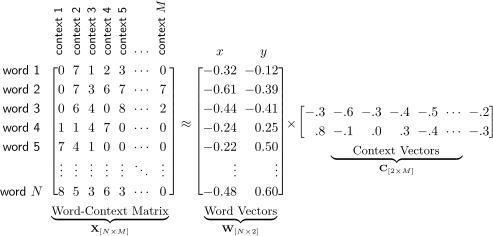
- High-level goal: Retain information about word-context relationships while reducing the \(M\)-dimensional representations of each word down to 3 dimensions.
- Low-level goal: Generate rank-\(K\) matrix \(\mathbf{W}\) which best approximates distances between words in \(M\)-dimensional space (rows in \(\mathbf{X}\))
Now We Put These Embeddings (Vectors) into Databases
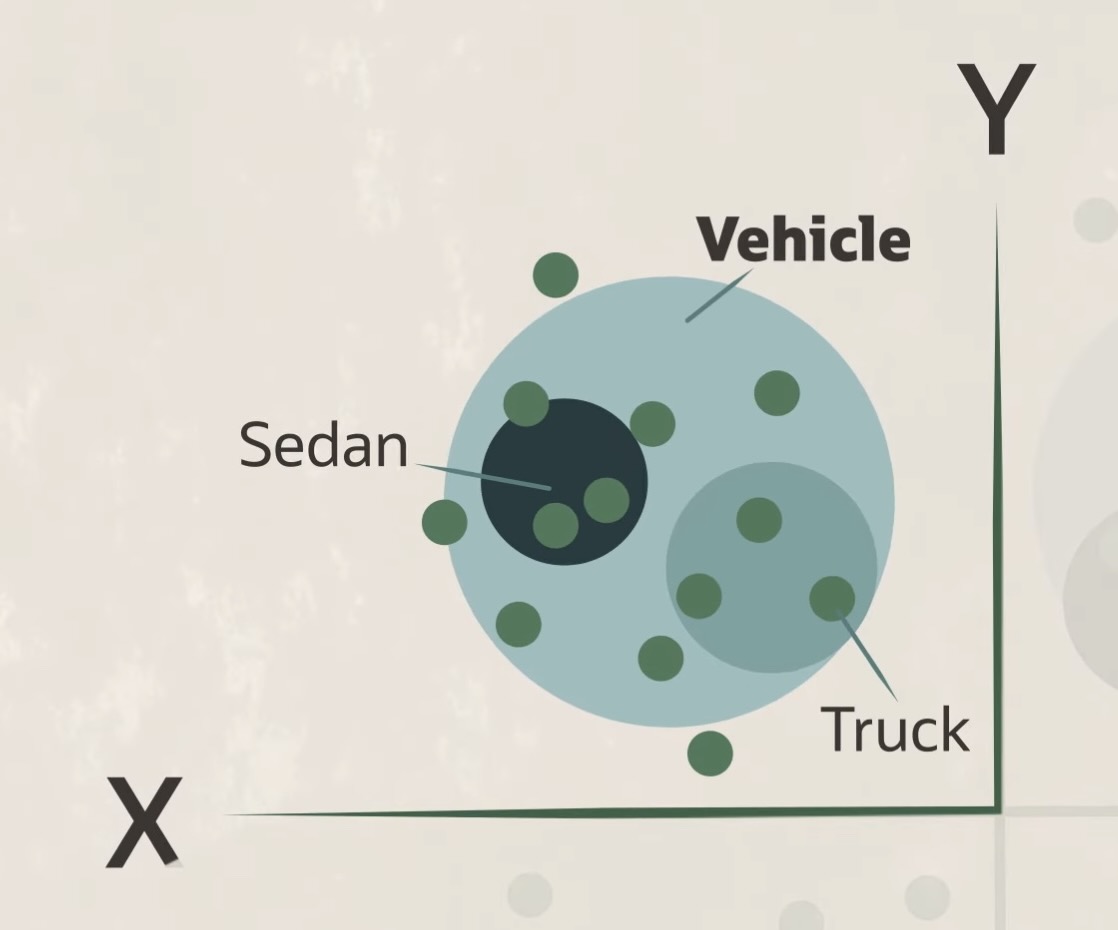
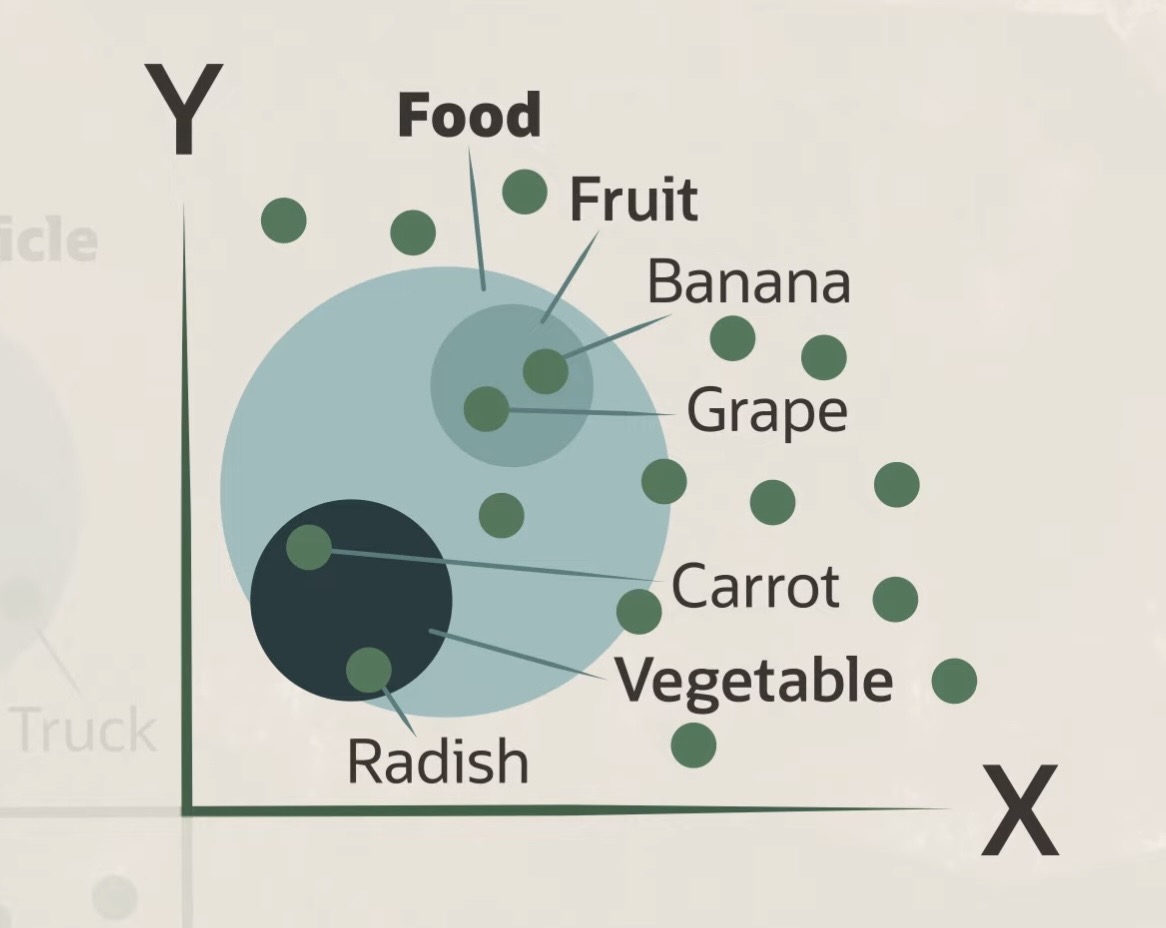
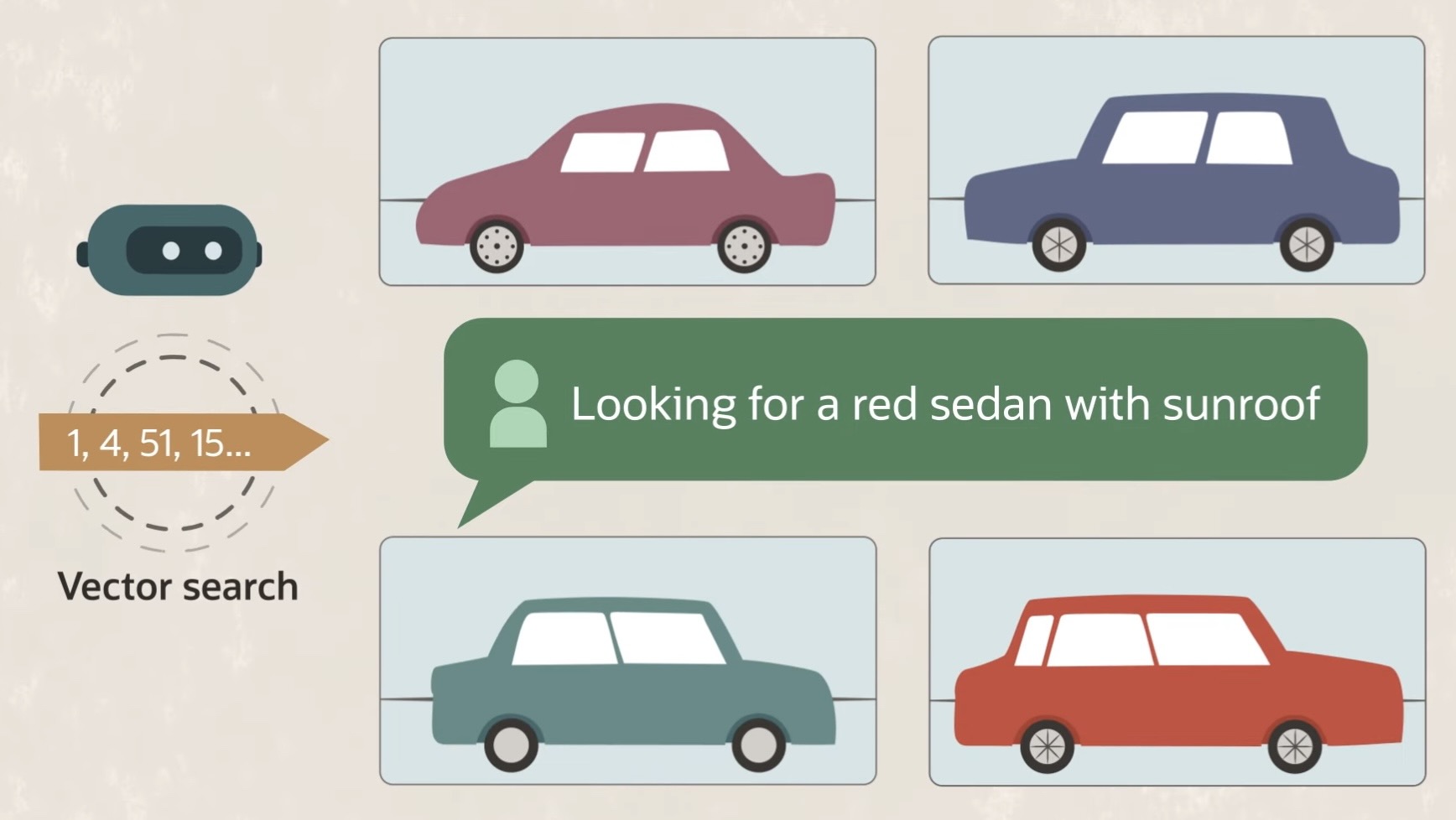
- The goal: identify similar object as vectors “close to” the location (in vector space) of a given query
Vector Search Workflow
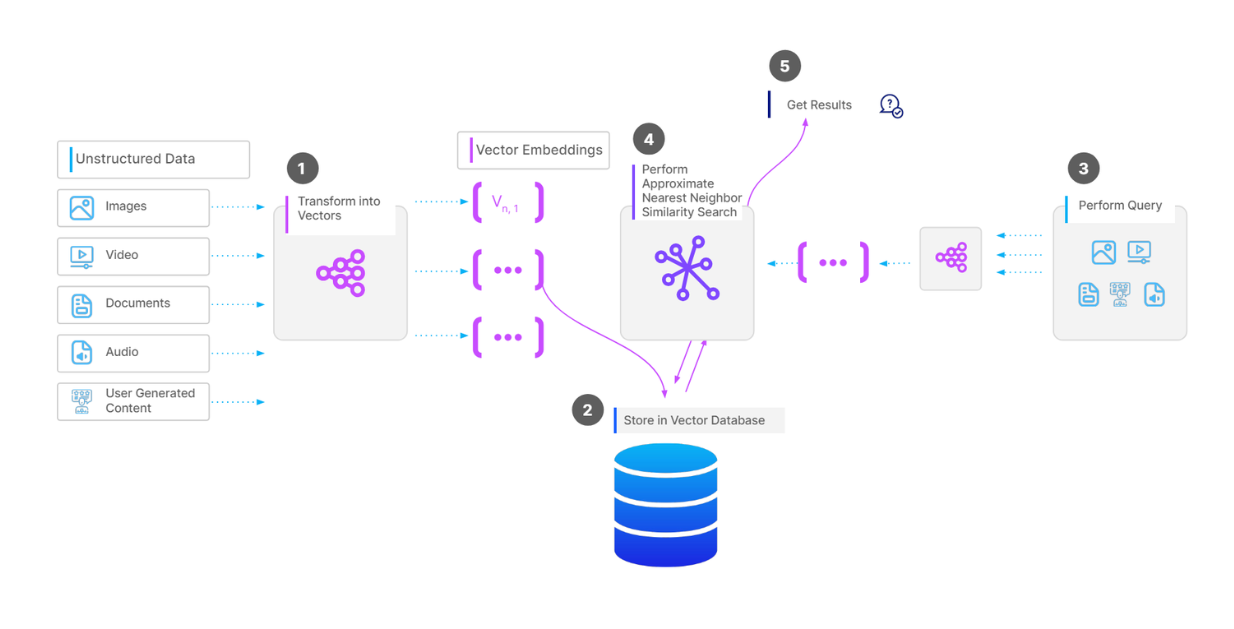
Unstructured Data \(\leadsto\) Structured Geometric Query Space
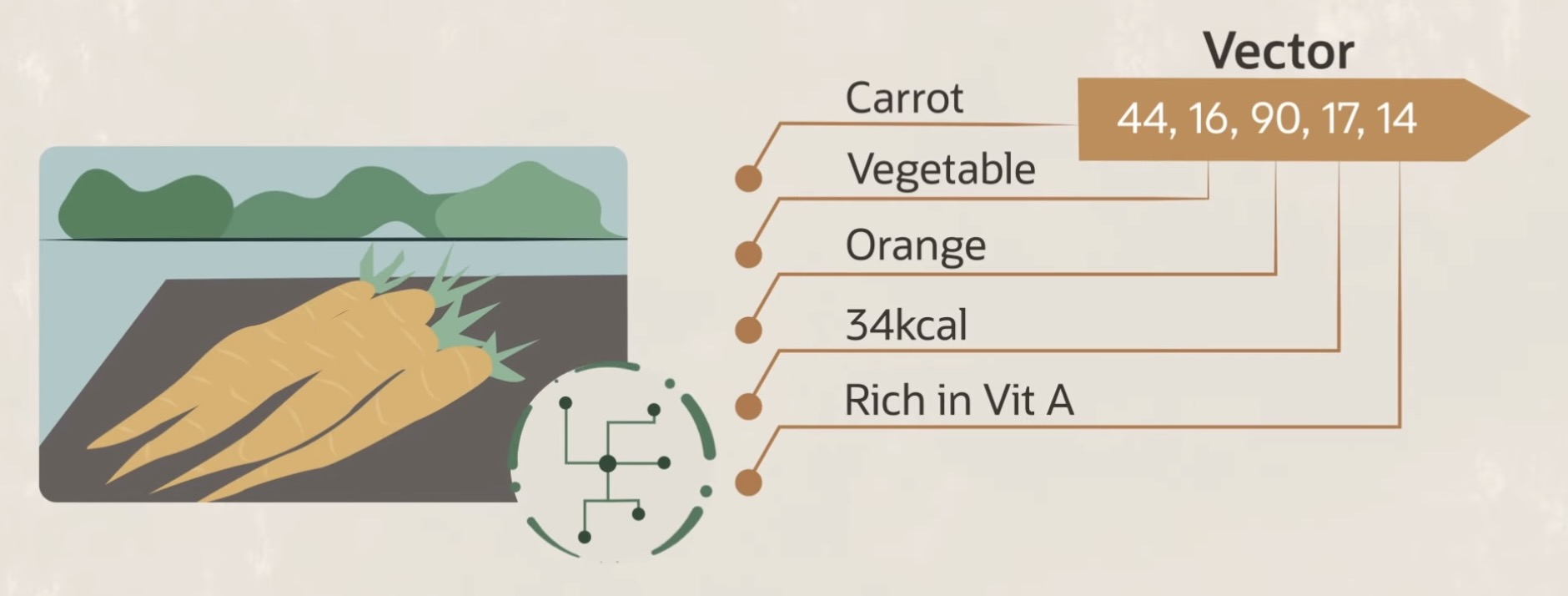
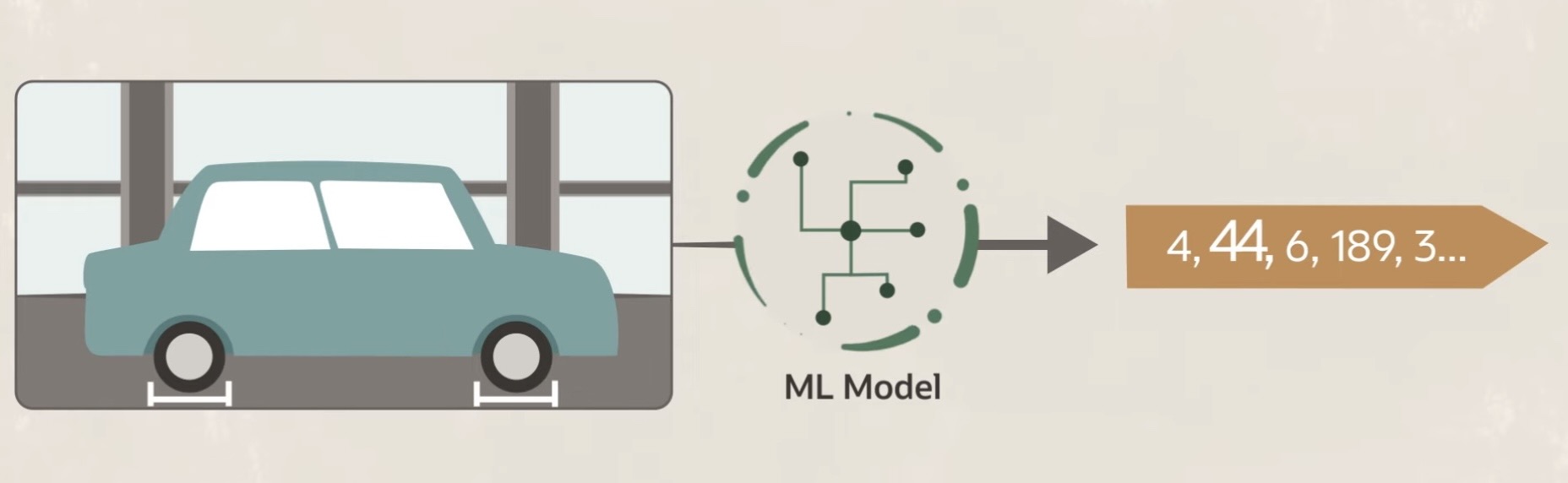
More Data \(\leadsto\) “Increasing Returns”
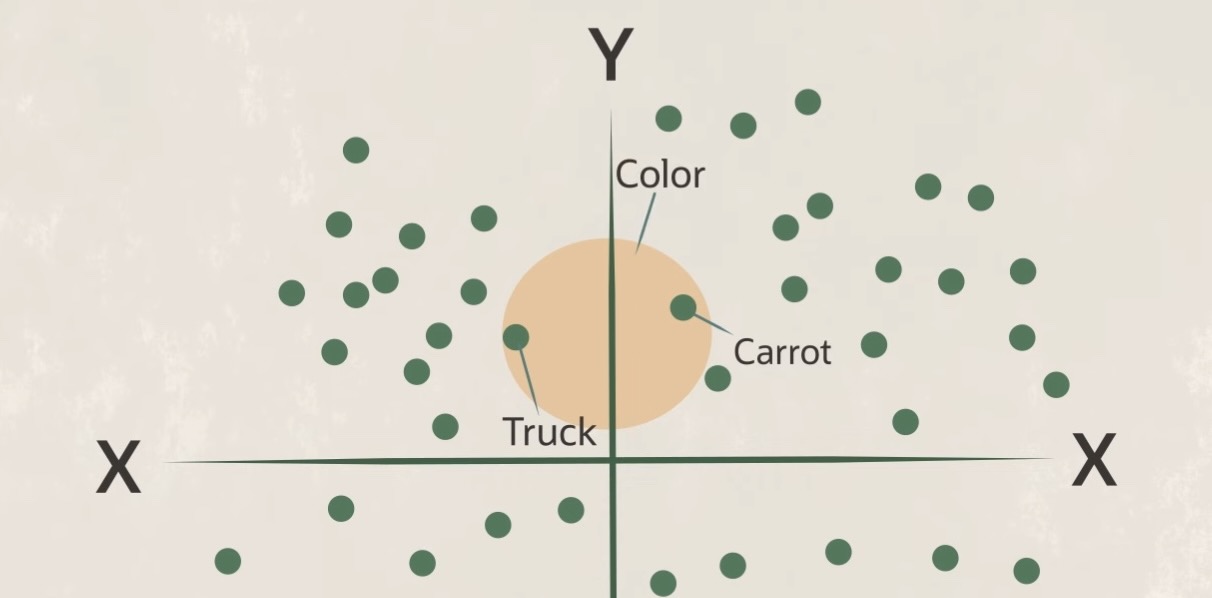
Queries Embedded via the Same Model!
Lab Time!
- Lab 11 on Canvas
- Lab 11 on GitHub Classroom