Week 11 Extra: Apache Airflow for ETL Pipelines

DSAN 6000: Big Data and Cloud Computing
Fall 2026

Jeff Jacobs

jj1088@georgetown.edu

Monday, November 16, 2026

Concepts \leadsto Code

start-airflow.sh
airflow db migrate
airflow api-server --port 8080
airflow scheduler
airflow dag-processor
airflow triggerer
  • Full Airflow “ecosystem” is running once you’ve started each piece via above (bash) commands!
  • Let’s look at each in turn…

db migrate: The Airflow Metastore

start-airflow.sh
airflow db migrate
airflow api-server --port 8080
airflow scheduler
airflow dag-processor
airflow triggerer
  • General info used by DAGs: variables, connections, XComs
  • Data about DAG and task runs (generated by scheduler)
  • Logs / error information
  • Not modified directly/manually! Managed by Airflow; To modify, use API Server →

API Server

start-airflow.sh
airflow db migrate
airflow api-server --port 8080
airflow scheduler
airflow dag-processor
airflow triggerer

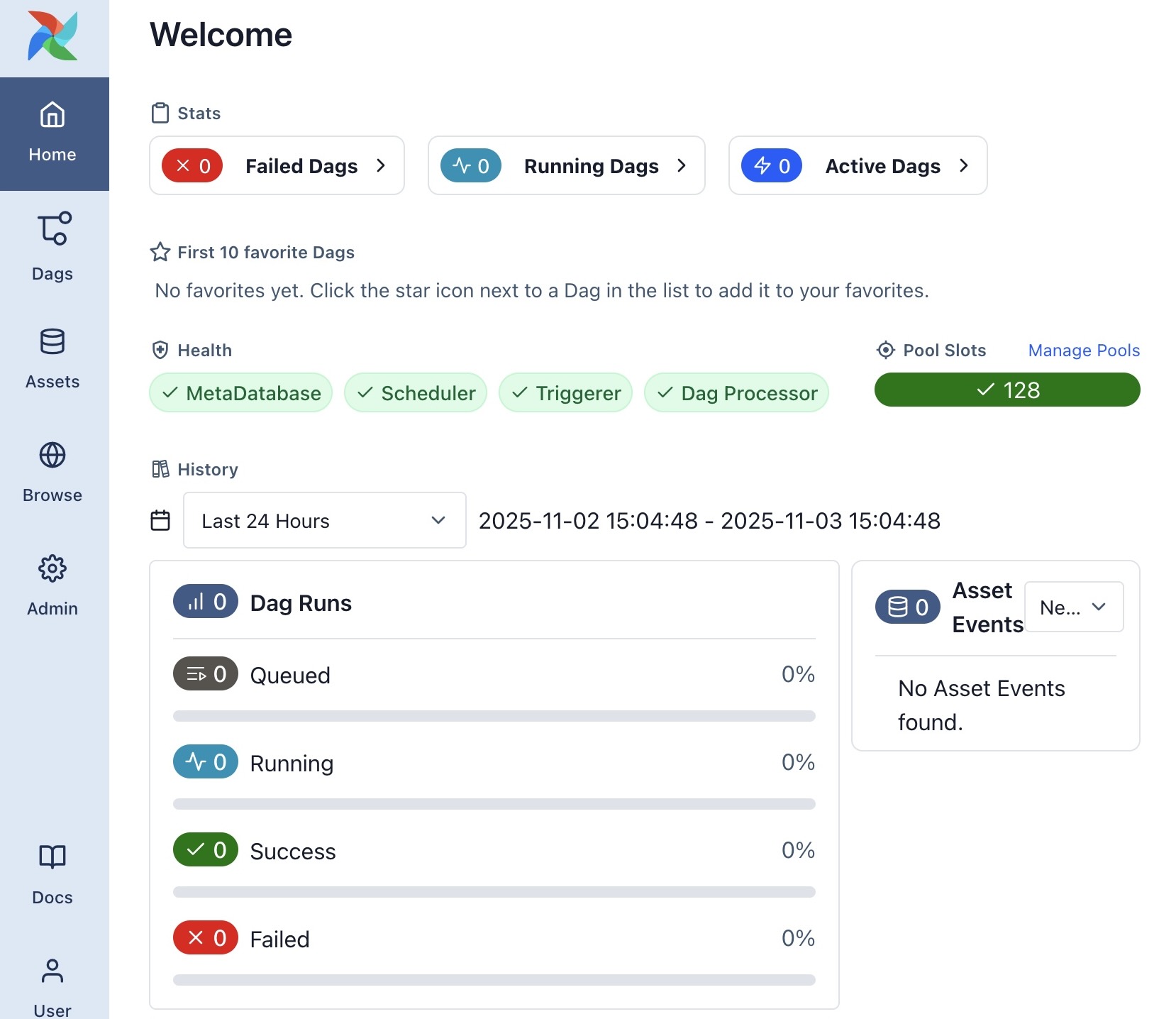
Web UI for managing Airflow (much more on this later!)

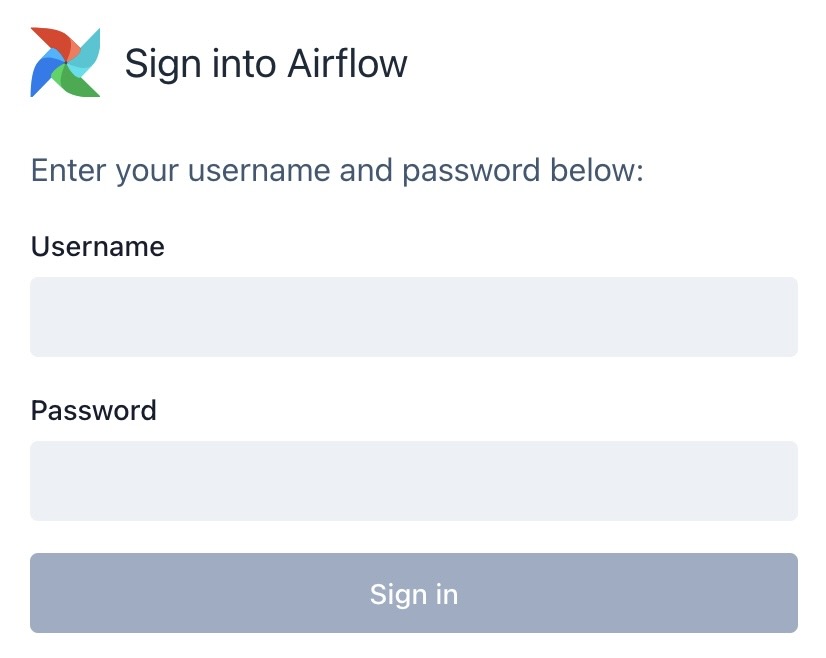
 Default Login Info

Default db migrate generates admin password in ~/simple_auth_manager_passwords.json.generated
Scheduler → Executor

start-airflow.sh
airflow db migrate
airflow api-server --port 8080
airflow scheduler
airflow dag-processor
airflow triggerer
  • Default: LocalExecutor
  • For scaling: EcsExecutor (AWS ECS), KubernetesExecutor
  • See also SparkSubmitOperator

From Ruiter et al. (2026)

DAG Processor

start-airflow.sh
airflow db migrate
airflow api-server --port 8080
airflow scheduler
airflow dag-processor
airflow triggerer

From Ruiter et al. (2026)

The schedule Argument

(Airflow uses pendulum under the hood, rather than datetime!)

dag_scheduling.py
from airflow.sdk import DAG
import pendulum
dag = DAG("regular_interval_cron_example", schedule="0 0 * * *", ...)
dag = DAG("regular_interval_cron_preset_example", schedule="@daily", ...)
dag = DAG("regular_interval_timedelta_example", schedule=pendulum.timedelta(days=1), ...)

Cron: Full-on scheduling language (used by computers since 1975!)

crontab.sh
# ┌───────────── minute (0–59)
# │ ┌───────────── hour (0–23)
# │ │ ┌───────────── day of the month (1–31)
# │ │ │ ┌───────────── month (1–12)
# │ │ │ │ ┌───────────── day of the week (0–6) (Sunday to Saturday)
# │ │ │ │ │
# │ │ │ │ │
# │ │ │ │ │
# * * * * * <command to execute>

Cron Presets: None, "@once", "@continuous", "@hourly", "@daily", "@weekly"

External Service Integration

Service Command
AWS pip install 'apache-airflow[amazon]'
Azure pip install 'apache-airflow[microsoft-azure]'
Databricks pip install 'apache-airflow[databricks]'
GitHub pip install 'apache-airflow[github]'
Google Cloud pip install 'apache-airflow[google]'
MongoDB pip install 'apache-airflow[mongo]'
OpenAI pip install 'apache-airflow[openai]'
Slack pip install 'apache-airflow[slack]'
Spark pip install 'apache-airflow[apache-spark]'
Tableau pip install 'apache-airflow[tableau]'

(And many more:)

Jinja Example

homepage.jinja
<h4>{{ me['name'] }}'s Favorite Hobbies</h4>
<ul>
{%- for hobby in hobbies %}
  <li>{{ hobby }}</li>
{%- endfor %}
</ul>
+
render_jinja.py
from jinja2 import Template
tmpl = Template('homepage.jinja')
tmpl.render(
    me = {'name': 'Jeff'},
    hobbies = [
        'eat',
        'sleep',
        'attend to the proverbial bag'
    ]
)

↓

rendered.html
<h4>Jeff's Favorite Hobbies</h4>
<ul>
  <li>eat</li>
  <li>sleep</li>
  <li>attend to the proverbial bag</li>
</ul>

\leadsto

Jeff's Favorite Hobbies

  • eat
  • sleep
  • attend to the proverbial bag

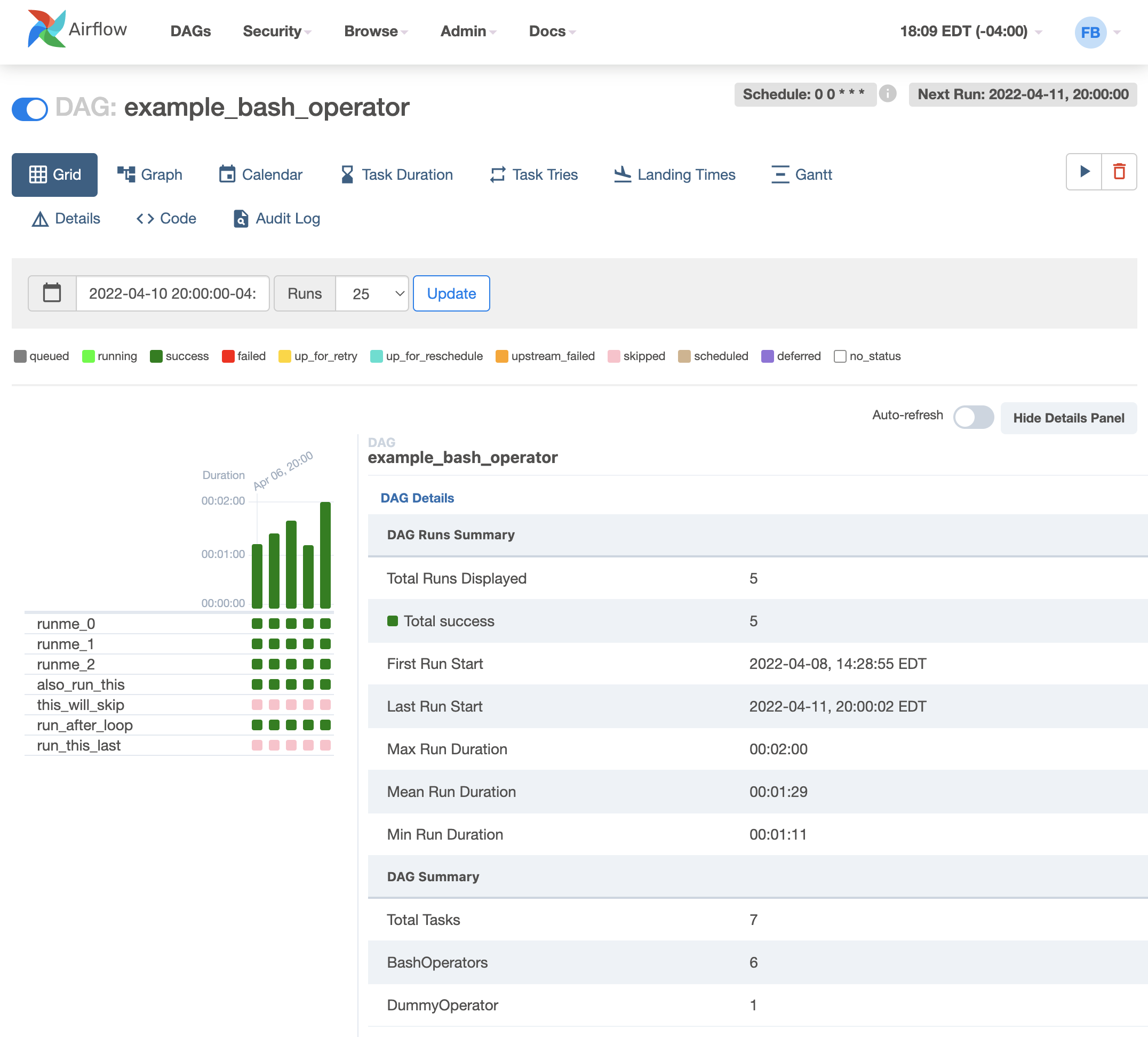
Airflow UI: Grid View

Airflow UI: Run Details
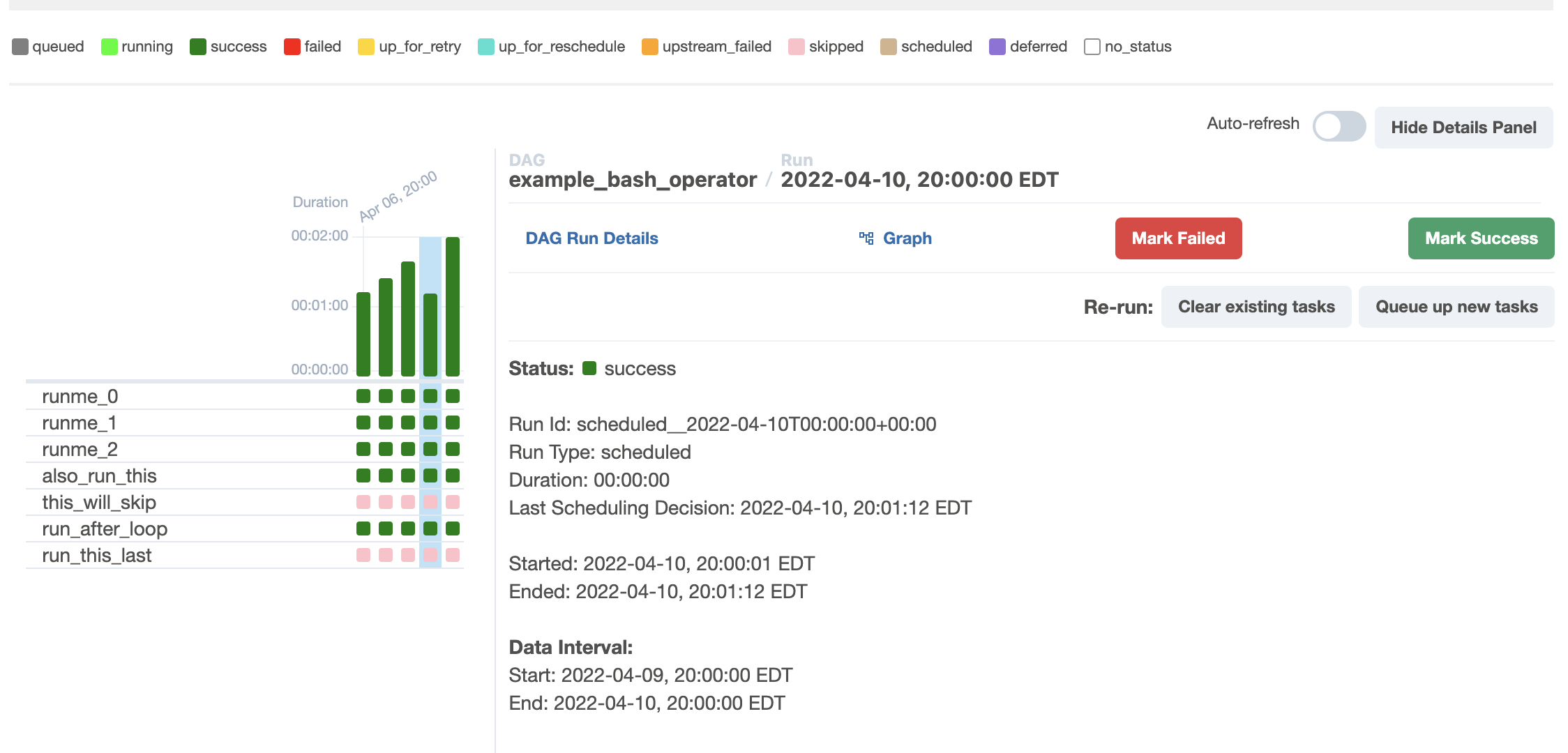
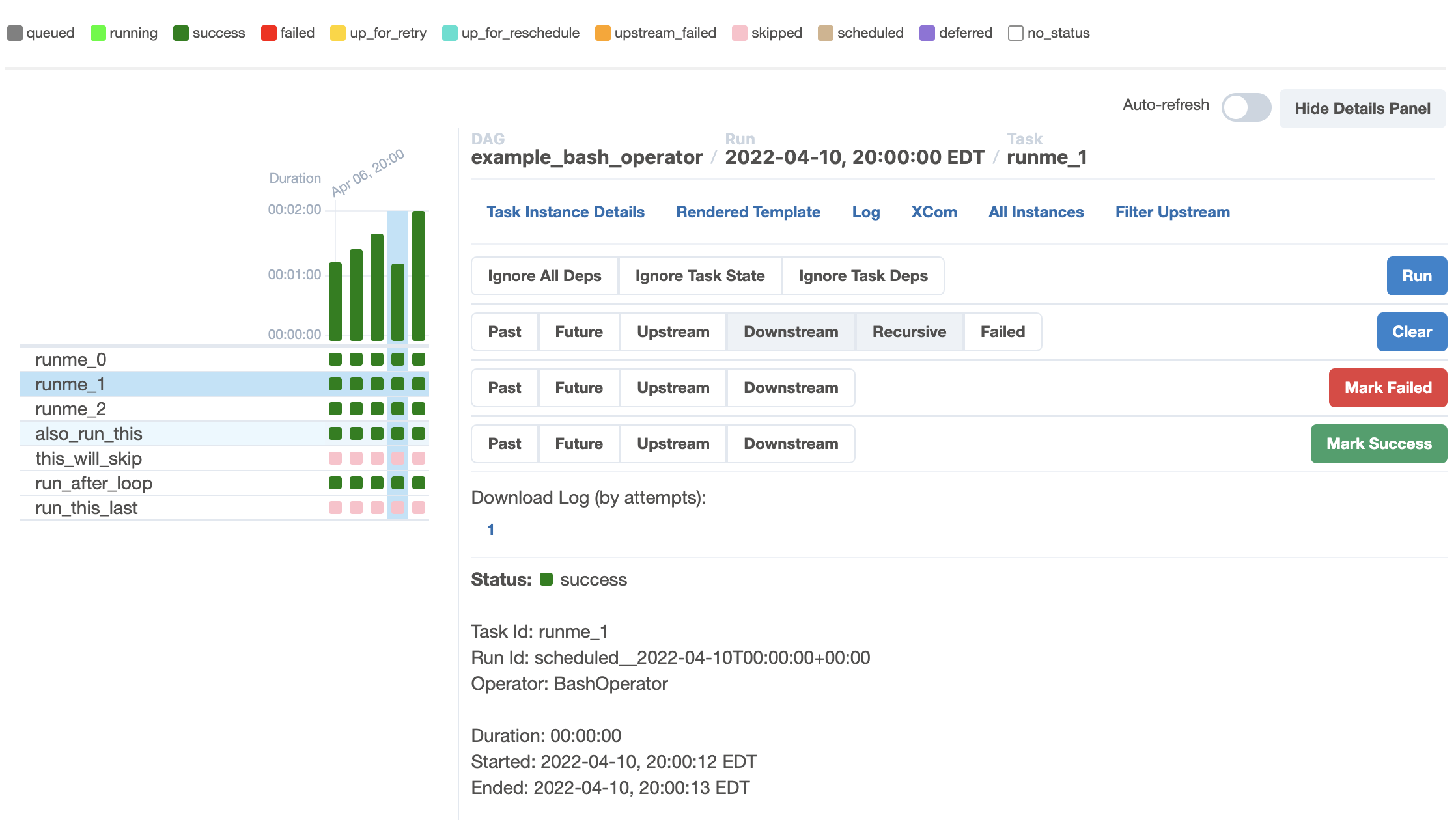
Airflow UI: Task Instance Details
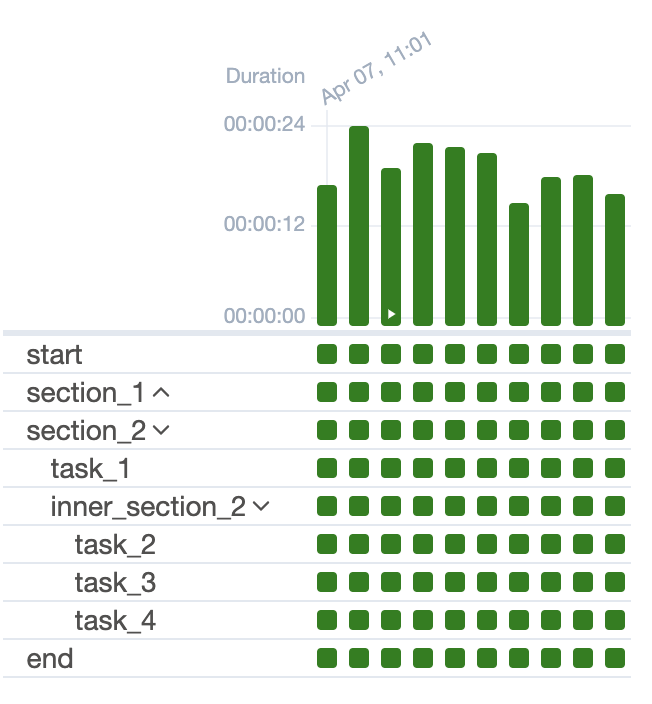
Tasks → Task Groups
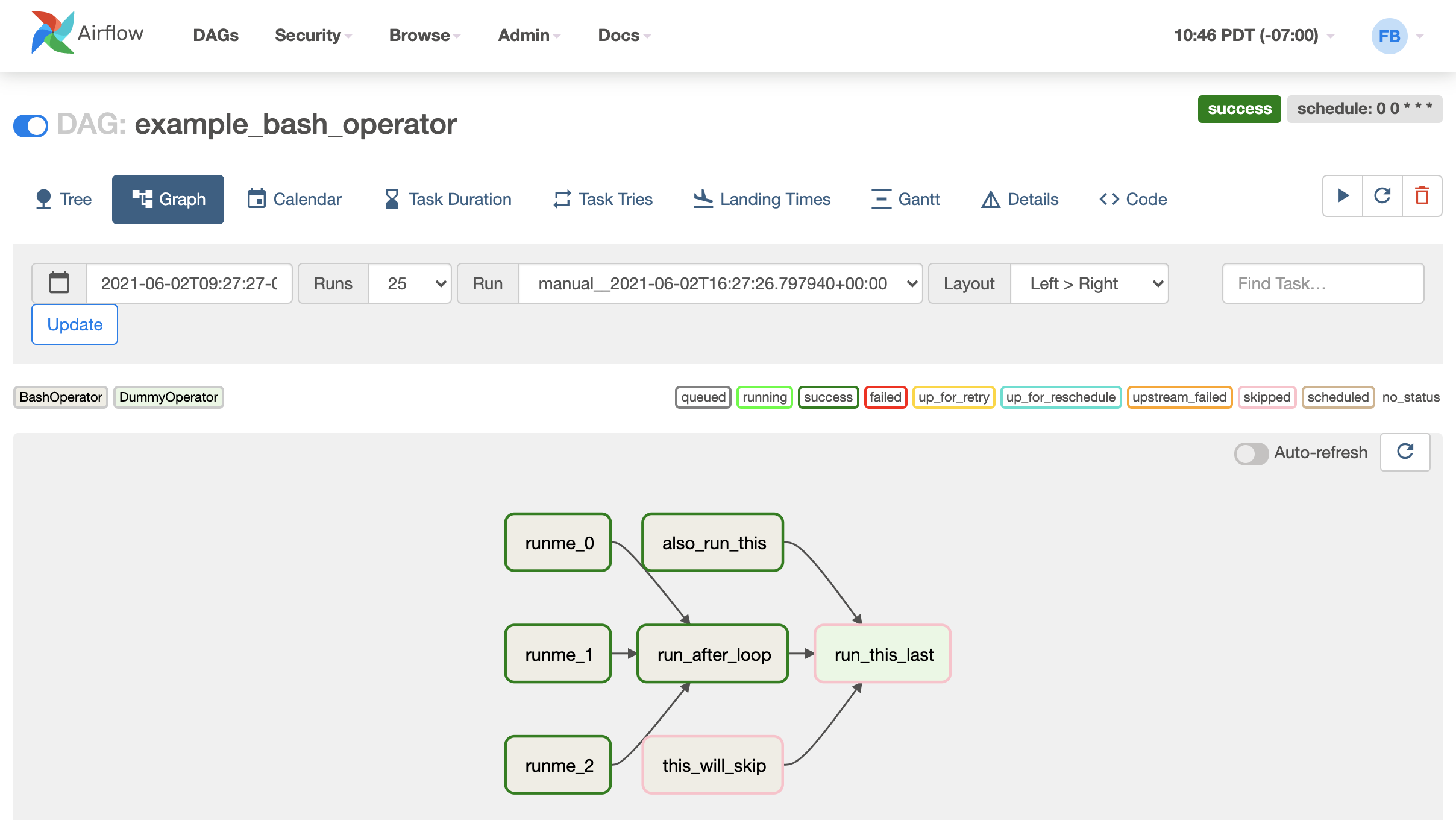
Graph View
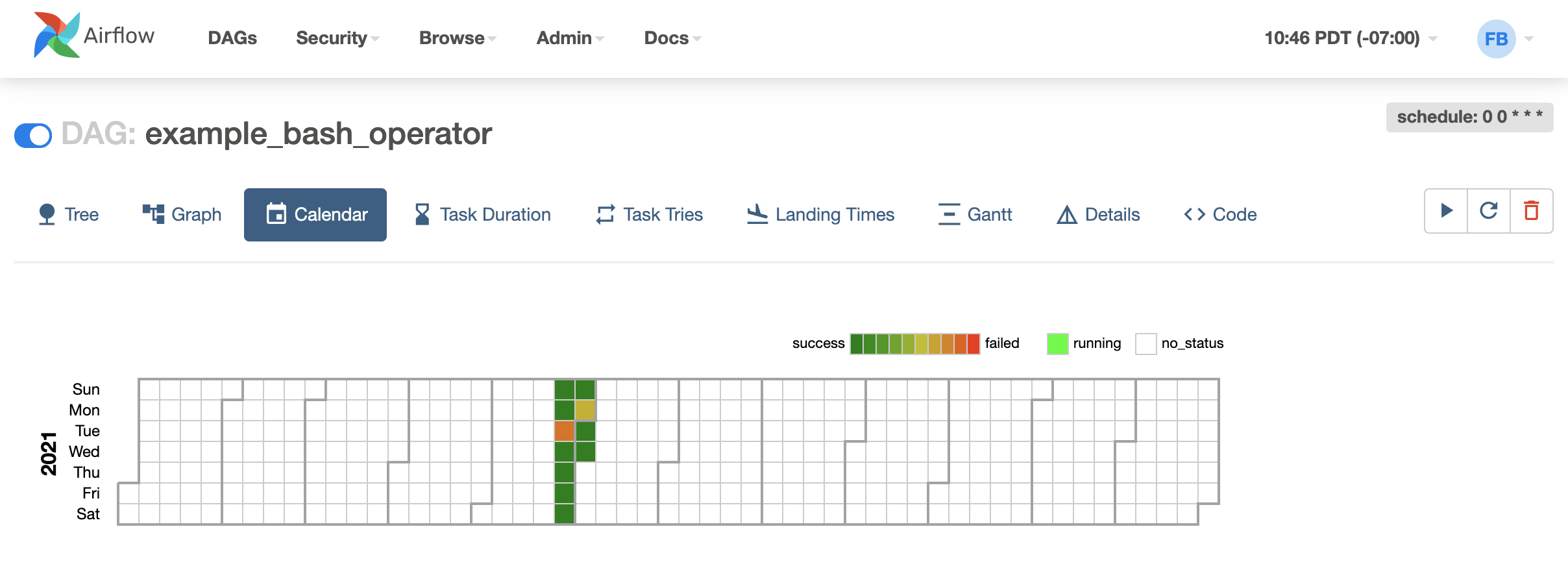
Calendar View
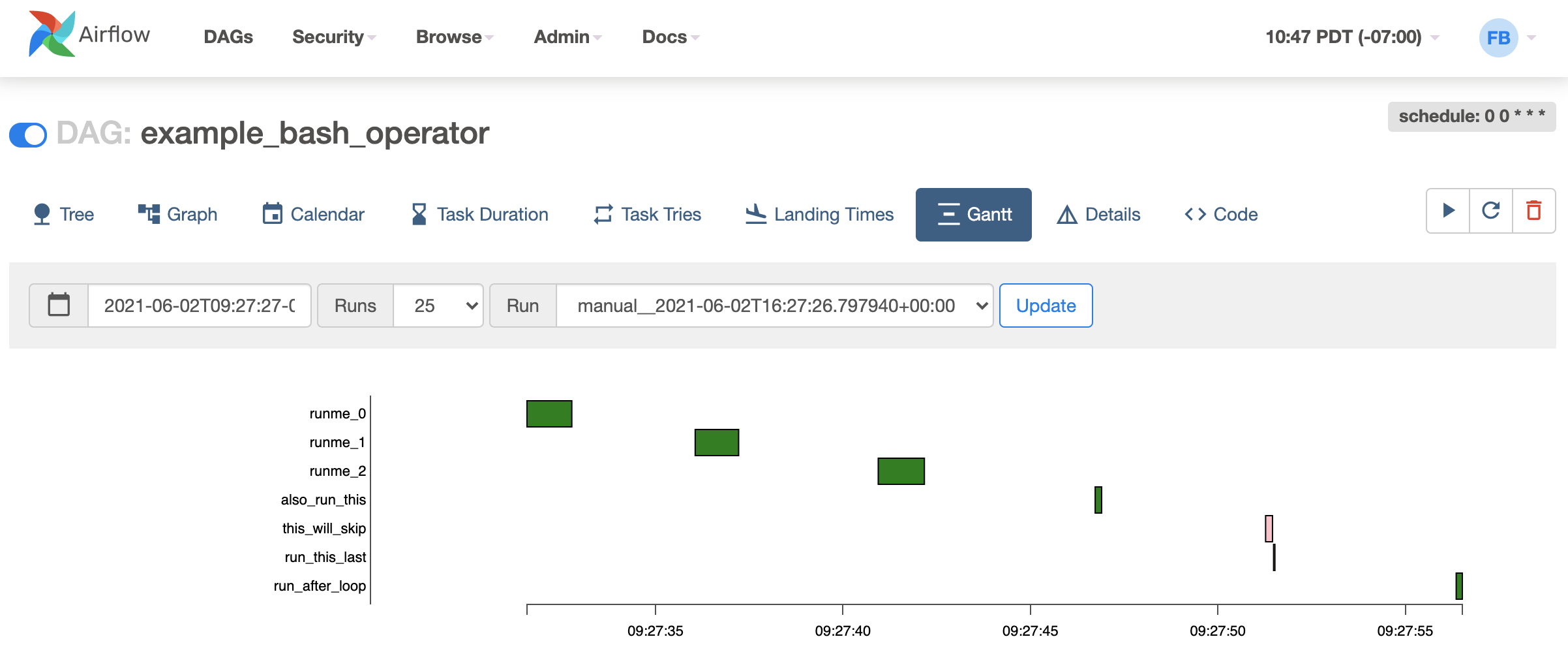
Gantt View
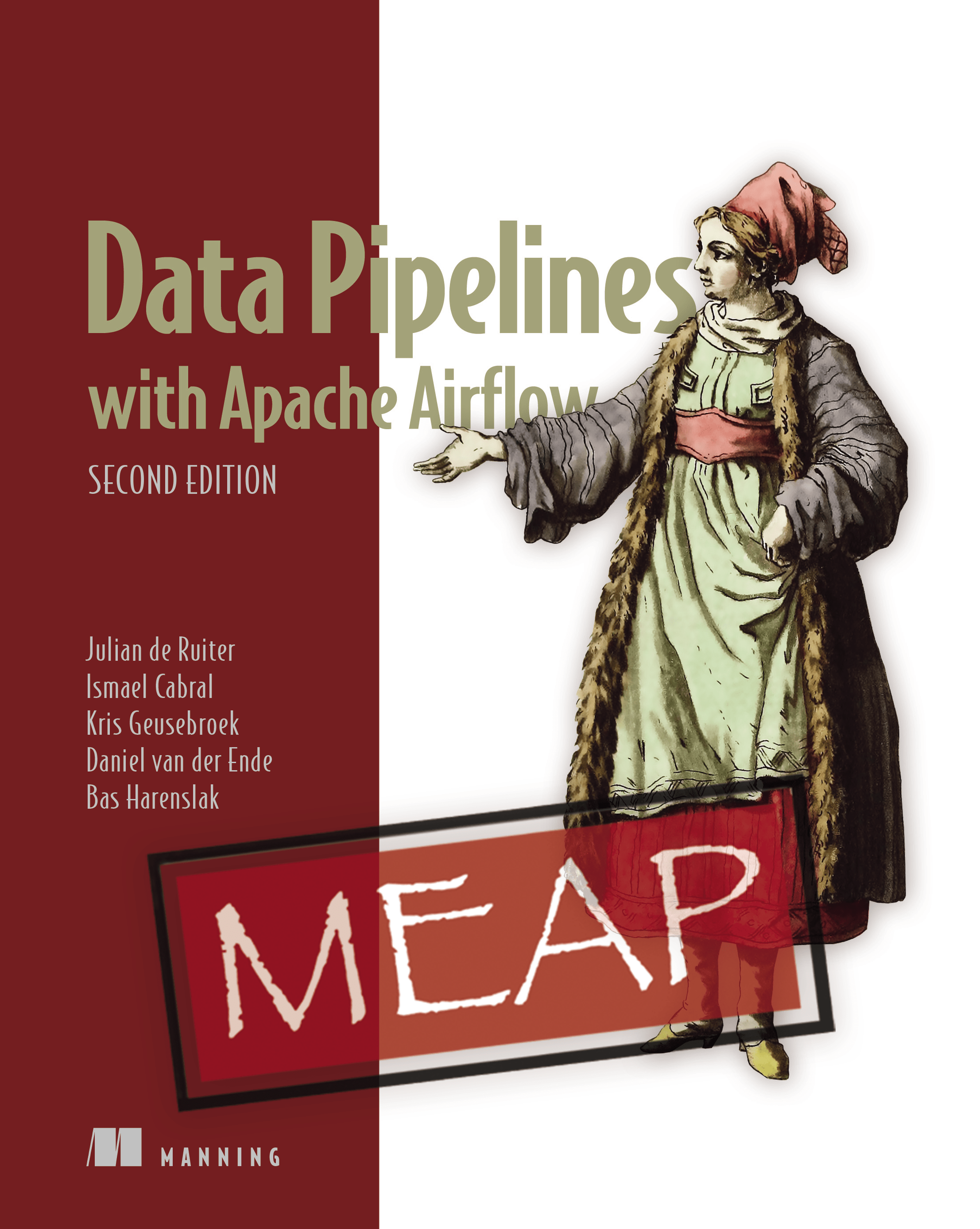
New Book: Up-To-Date (Airflow 3.0) Demos 🤓
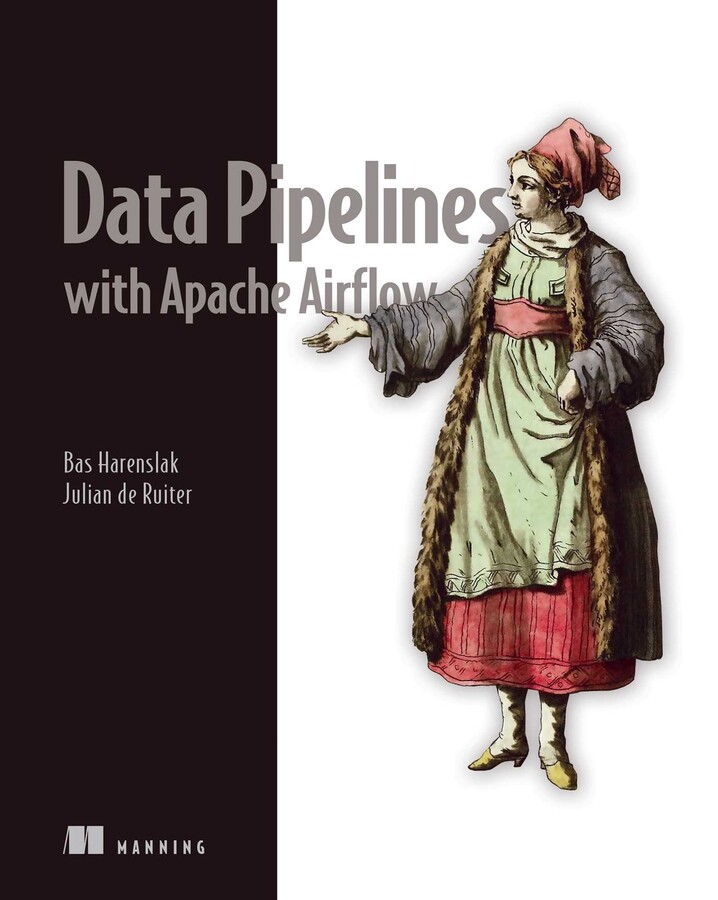
Harenslak and Ruiter (2021)

\leadsto

Ruiter et al. (2026)

Conceptual Pipelines \leadsto DAGs

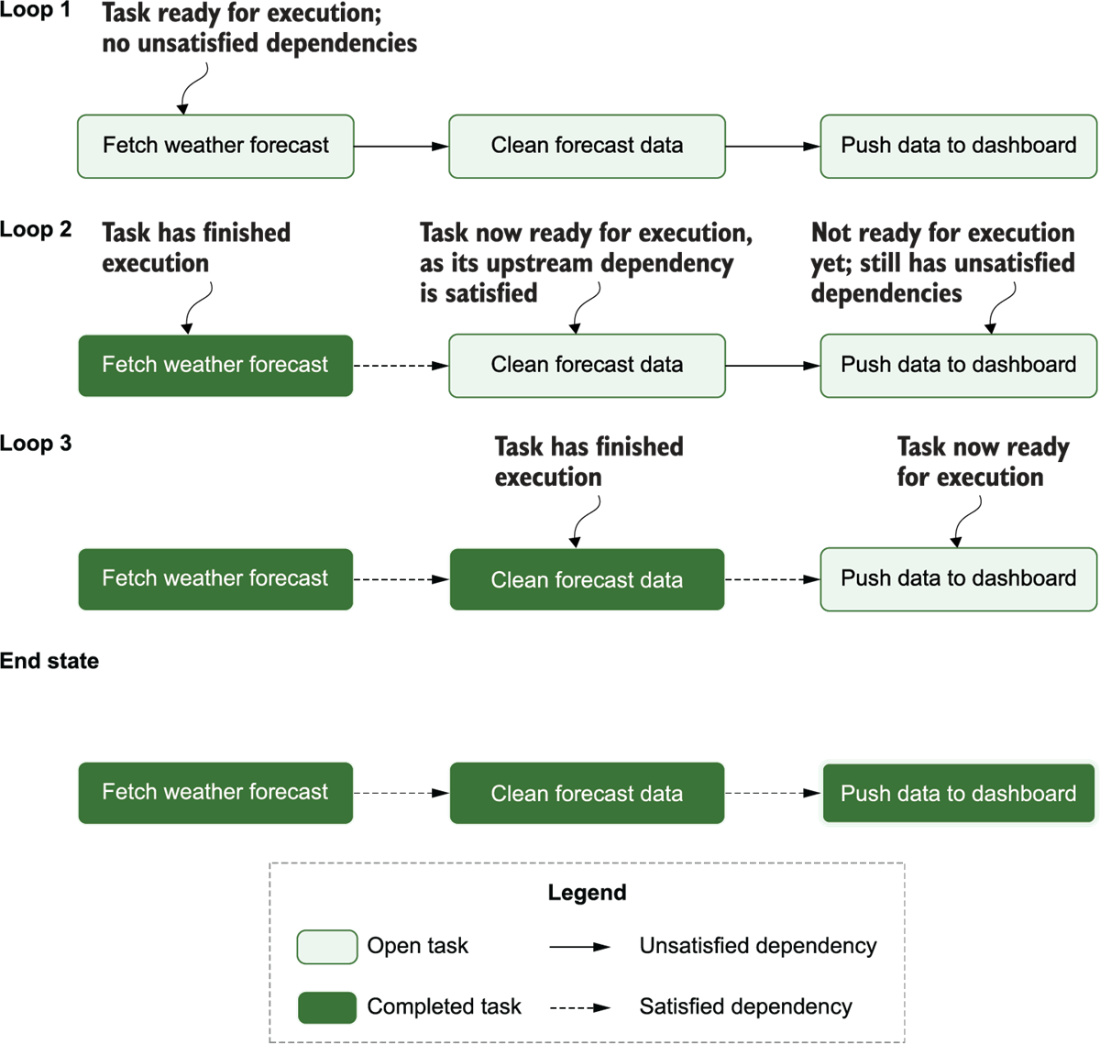
Main challenge: converting “intuitive” pipelines in our heads:
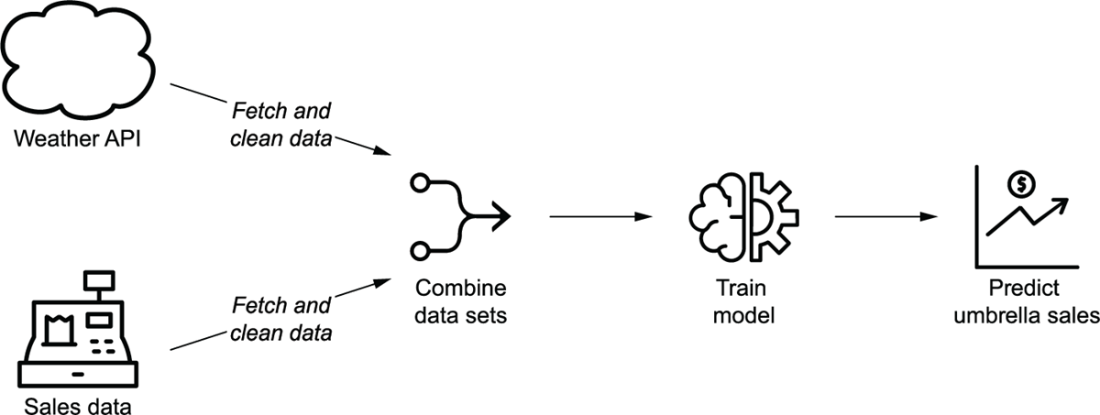
From Ruiter et al. (2026)

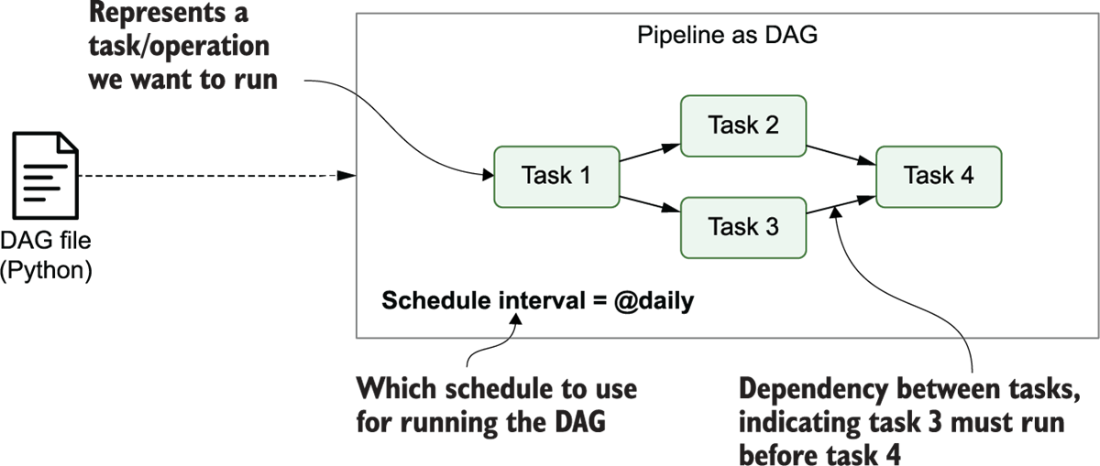
Into DAGs with concrete Tasks, dependencies, and triggers:

Also from Ruiter et al. (2026)

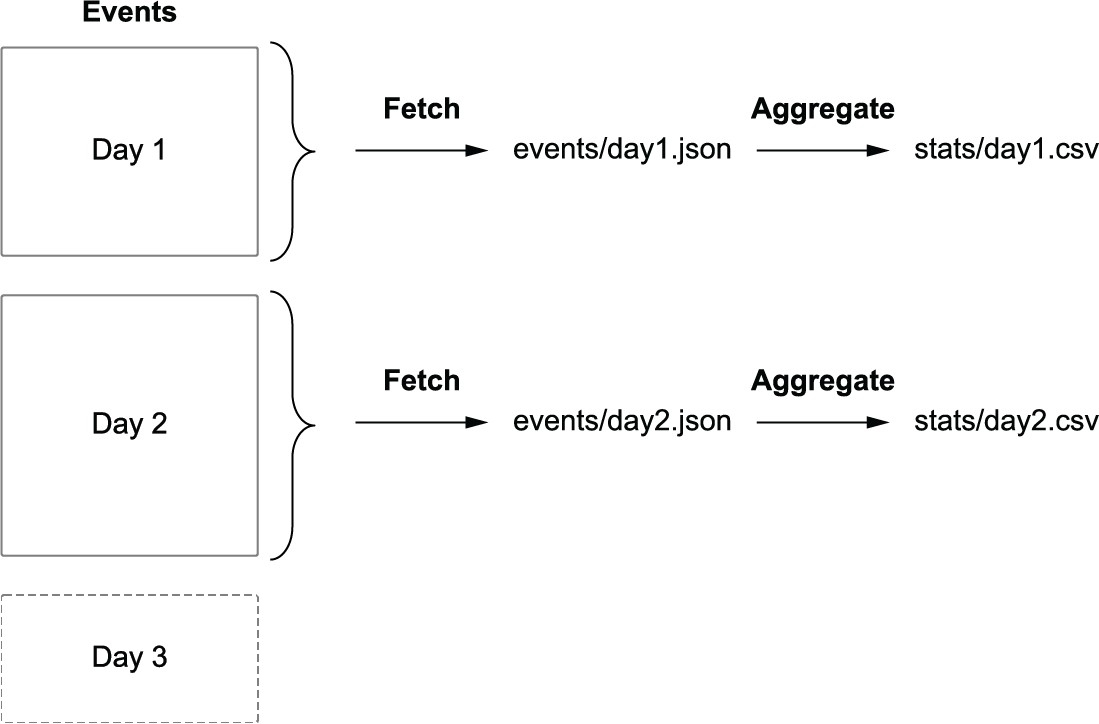
Implementation Detail 1: Backfilling

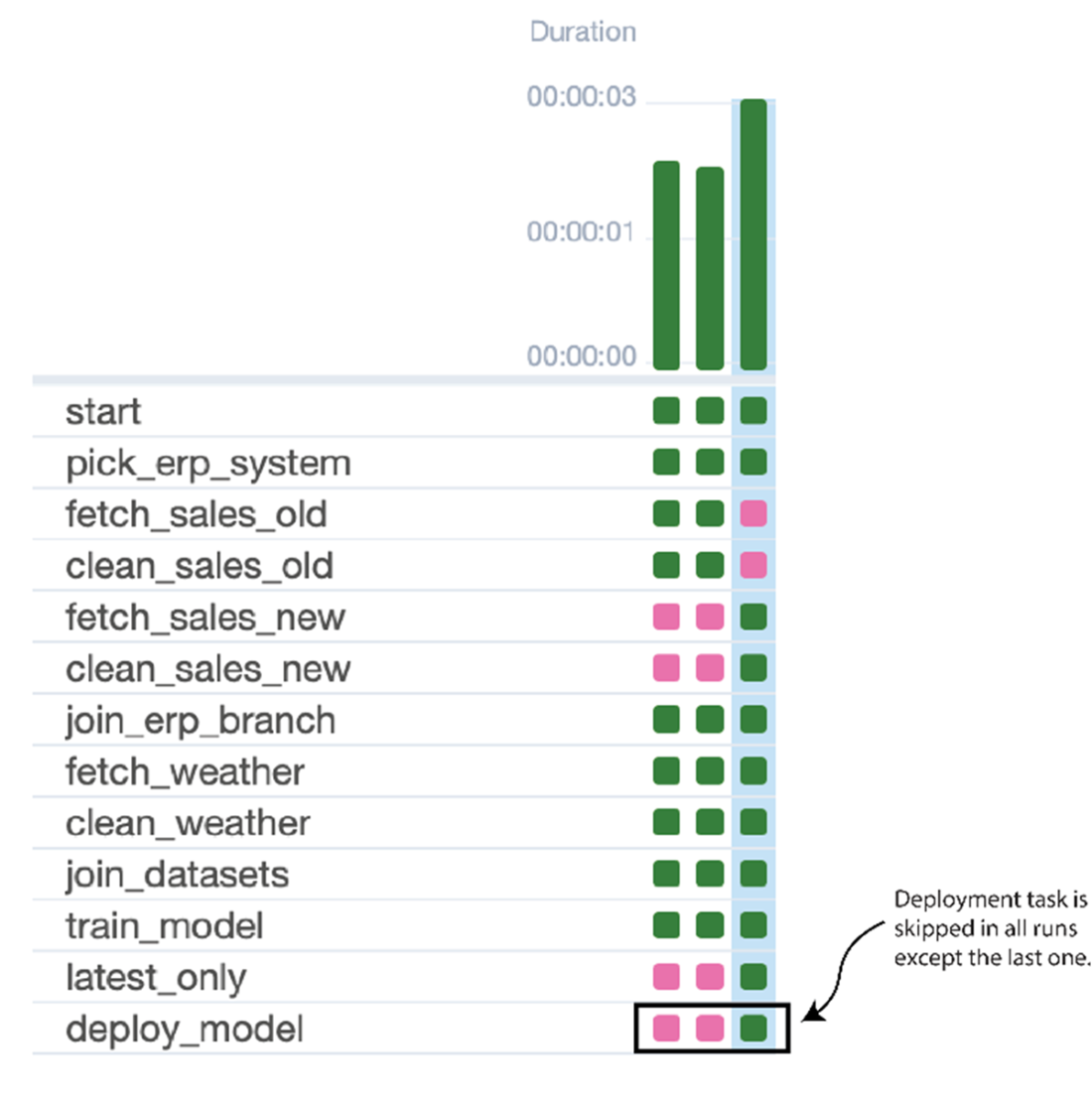
Implementation Detail 2: Train Model Only After Backfill
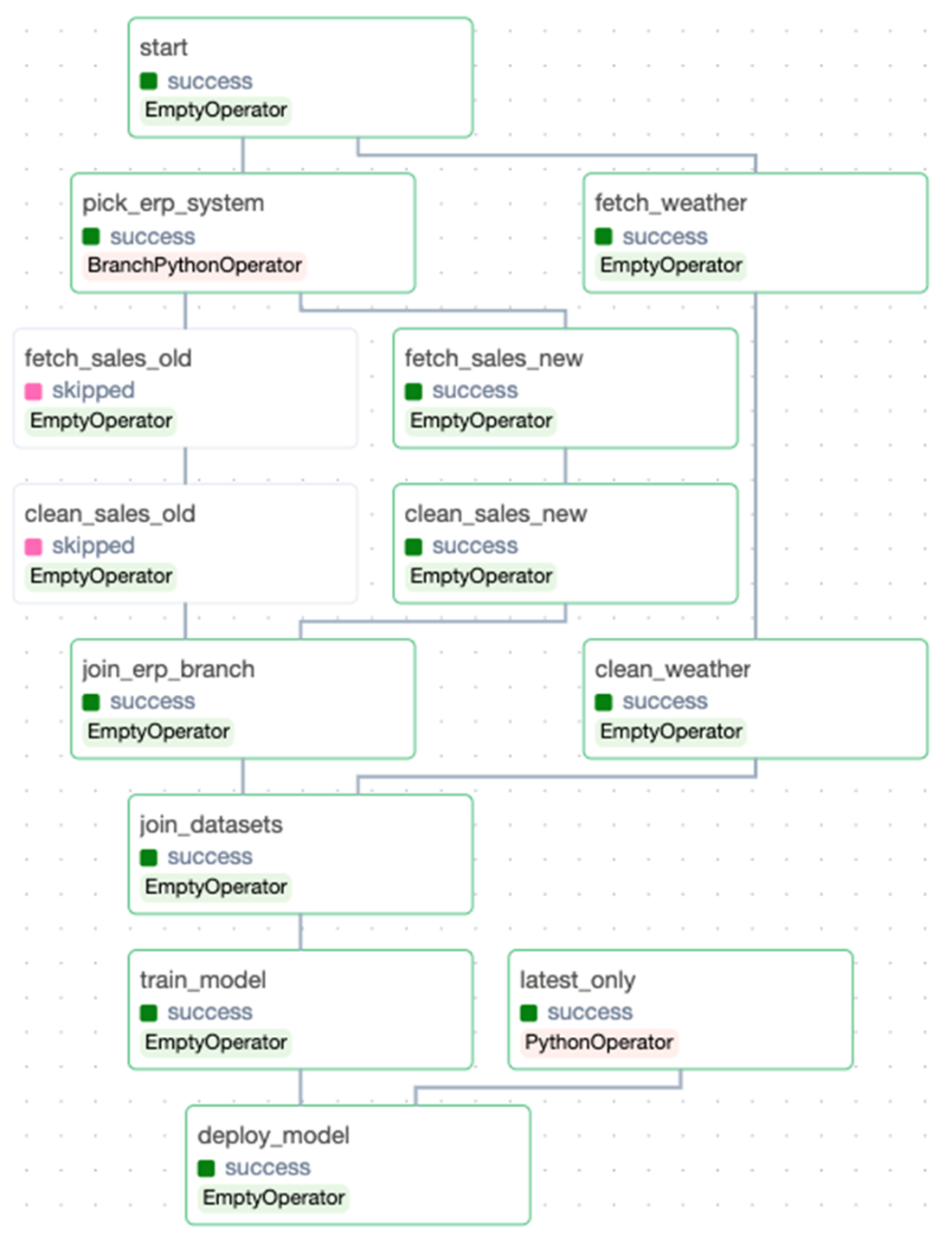
Fig 1: Both figures from Ruiter et al. (2026)

Implementation Detail 3: Downstream Consumers
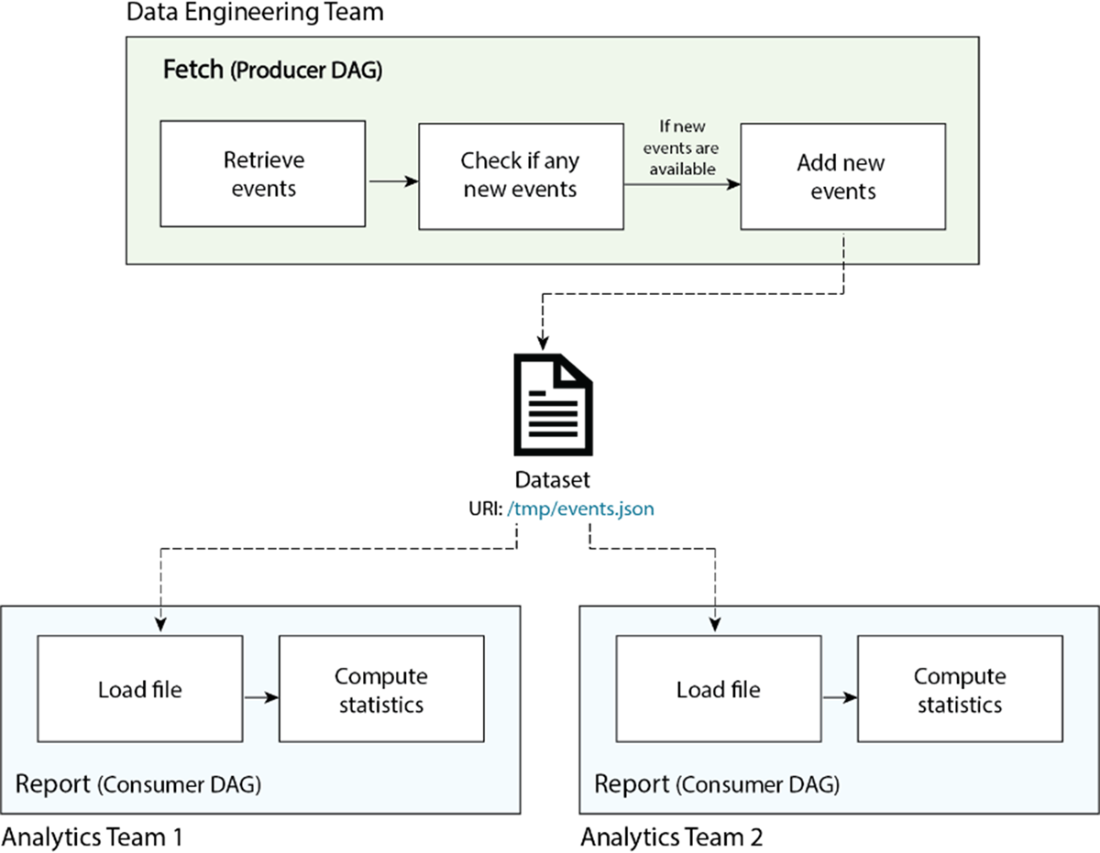
From Ruiter et al. (2026)

References

Harenslak, Bas P., and Julian de Ruiter. 2021. Data Pipelines with Apache Airflow. Simon and Schuster.
Ruiter, Julian de, Ismael Cabral, Kris Geusebroek, Daniel van der Ende, and Bas Harenslak. 2026. Data Pipelines with Apache Airflow, Second Edition. Simon and Schuster.