Week 6: Introduction to Spark

DSAN 6000: Big Data and Cloud Computing
Fall 2025

Amit Arora and Jeff Jacobs

jj1088@georgetown.edu

Monday, September 29, 2025

Highest-Level Overview (Roadmap!)

  • Week 3: Map-Reduce
    • But, just the “plain”, basic version built into Python (map(), functools.reduce())
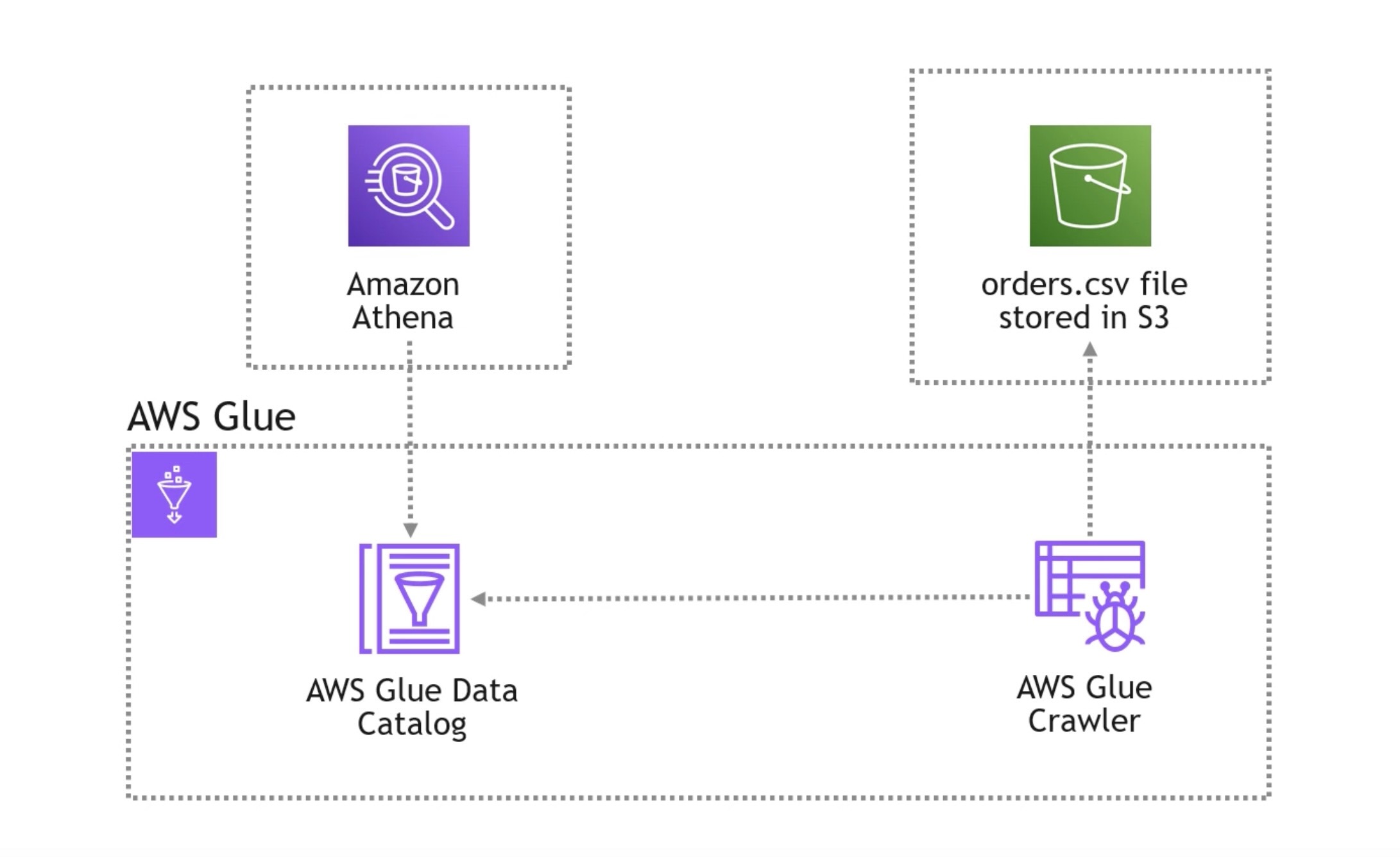
  • Last Week: Athena with AWS Glue under the hood
    • “Automated” ETL Pipeline!
  • This Week: Hitting a wall with Athena… It doesn’t know in advance what [types of] queries you’re going to make!
  • If you’re going to group by (e.g.) state, then rent 50 computers to process one state each, Athena doesn’t know to place the Ohio data on the Ohio computer!
  • We need a way to “steer” Map-Reduce’s choices… Enter Hadoop MapReduce!

A Reminder: Map-Reduce as a Paradigm

What Happens When Not Embarrassingly Parallel?

  • Think of the difference between linear and quadratic equations in algebra:
  • \(3x - 1 = 0\) is “embarrassingly” solvable, on its own: you can solve it directly, by adding 3 to both sides \(\implies x = \frac{1}{3}\). Same for \(2x + 3 = 0 \implies x = -\frac{3}{2}\)
  • Now consider \(6x^2 + 7x - 3 = 0\): Harder to solve “directly”, so your instinct might be to turn to the laborious quadratic equation:

\[ \begin{align*} x = \frac{-b \pm \sqrt{b^2 - 4ac}}{2a} = \frac{-7 \pm \sqrt{49 - 4(6)(-3)}}{2(6)} = \frac{-7 \pm 11}{12} = \left\{\frac{1}{3},-\frac{3}{2}\right\} \end{align*} \]

  • And yet, \(6x^2 + 7x - 3 = (3x - 1)(2x + 3)\), meaning that we could have split the problem into two “embarrassingly” solvable pieces, then multiplied to get result!

The Analogy to Map-Reduce

\(\leadsto\) If code is not embarrassingly parallel (instinctually requiring laborious serial execution), \(\underbrace{6x^2 + 7x - 3 = 0}_{\text{Solve using Quadratic Eqn}}\)
But can be split into… \((3x - 1)(2x + 3) = 0\)
Embarrassingly parallel pieces which combine to same result, \(\underbrace{3x - 1 = 0}_{\text{Solve directly}}, \underbrace{2x + 3 = 0}_{\text{Solve directly}}\)
We can use map-reduce to achieve ultra speedup (running “pieces” on GPU!) \(\underbrace{(3x-1)(2x+3) = 0}_{\text{Solutions satisfy this product}}\)

“Factoring” into Embarrassing and Non-Embarrassing Pieces

  • Problem from DSAN 5000/5100: Computing SSR (Sum of Squared Residuals)
  • \(y = (1,3,2), \widehat{y} = (2, 5, 0) \implies \text{SSR} = (1-2)^2 + (3-5)^2 + (2-0)^2 = 9\)
  • Computing pieces separately:
map(do_something_with_piece, list_of_pieces)
[1, 4, 4]
  • Combining solved pieces
reduce(how_to_combine_pair_of_pieces, pieces_to_combine)
9

But… Why is All This Weird Mapping and Reducing Necessary?

  • Without knowing a bit more of the internals of computing efficiency, it may seem like a huge cost in terms of overly-complicated overhead, not to mention learning curve…

The “Killer Application”: Matrix Multiplication

  • (I learned from Jeff Ullman, who did the obnoxious Stanford thing of mentioning in passing how “two previous students in the class did this for a cool final project on web crawling and, well, it escalated quickly”, aka became Google)

From Leskovec, Rajaraman, and Ullman (2014), which is (legally) free online!

The Killer Way-To-Learn: Text Counts!

  • (2014): Text counts (2.2) \(\rightarrow\) Matrix multiplication (2.3) \(\rightarrow \cdots \rightarrow\) PageRank (5.1)
  • (And yall thought it was just busywork for HW3 😏)
  • The goal: User searches “Denzel Curry”… How relevant is a given webpage?
  • Scenario 1: Entire internet fits on CPU \(\Rightarrow\) Can just make a big big hash table:

G internet Scan in O(n): Today Denzel Washington ate a big bowl of Yum's curry. Denzel allegedly rubbed his tum and said "yum yum yum" when he tasted today's curry. "Yum! It is me Denzel, curry is my fav!", he exclaimed. According to his friend Steph, curry is indeed Denzel's fav. We are live with Del Curry in Washington for a Denzel curry update. ccounts Overall Counts ('according',1) ('allegedly',1) ('ate',1) ('big',1) ('bowl',1) ('curry',6) ('del',1) ('denzel',5) ('exclaimed',1) ('fav',2) ('friend',1) ('indeed',1) ('live',1) ('rubbed',1) ('said',1) ('steph',1) ('tasted',1) ('today',2) ('tum',1) ('update',1) ('washington',2) ('yum',4) internet->ccounts Hash Table

If Everything Doesn’t Fit on CPU…

From Cornell Virtual Workshop, “Understanding GPU Architecture”

Break Problem into Chunks for the Green Bois!

G chunked Chunked Document Today Denzel Washington ate a big bowl of Yum's curry. Denzel allegedly rubbed his tum and said "yum yum yum" when he tasted today's curry. "Yum! It is me Denzel, curry is my fav!", he exclaimed. According to his friend Steph, curry is indeed Denzel's fav. We are live with Del Curry in Washington for a Denzel curry update. chcounts Chunked Counts ('today',1) ('denzel',1) ... ('tum',1) ('said',1) ('yum',1) ('yum',1) ('yum',1) ... ('fav',1) ('exclaimed',1) ... ('del',1) ('curry',1) ('washington',1) ('denzel',1) ('curry',1) ('update',1) chunked:p1->chcounts:p1 O(n/4) chunked:p2->chcounts:p2 O(n/4) chunked:p3->chcounts:p3 O(n/4) chunked:p4->chcounts:p4 O(n/4) scounts Hashed Counts ('allegedly',1) ... ('curry',1) ('denzel',2) ... ('yum',1) ('curry',2) ('denzel',1) ... ('yum',4) ('according',1) ('curry',1) ('del',1) ('denzel',1) ... ('curry',2) ('denzel',1) ('update',1) ('washington',1) chcounts:p1->scounts:p1 O(n/4) chcounts:p2->scounts:p2 O(n/4) chcounts:p3->scounts:p3 O(n/4) chcounts:p4->scounts:p4 O(n/4) ccounts Overall Counts ('according',1) ('allegedly',1) ('ate',1) ('big',1) ('bowl',1) ('curry',6) ('del',1) ('denzel',5) ('exclaimed',1) ('fav',2) ('friend',1) ('indeed',1) ('live',1) ('rubbed',1) ('said',1) ('steph',1) ('tasted',1) ('today',2) ('tum',1) ('update',1) ('washington',2) ('yum',4) scounts:p1->ccounts:p1 scounts:p2->ccounts:p1 scounts:p3->ccounts:p1 scounts:p4->ccounts:p1 scounts:p2->ccounts Merge in O(n)

  • \(\implies\) Total = \(O(3n) = O(n)\)
  • But also optimized in terms of constants, because of sequential memory reads

In-Class Demo 1

Map-Reduced Matrix-Vector Multiplication Demo

In-Class Demo 2

In-Class Demo 3

Tennis! Swingin rackets! Scorin goals!

Lab Time!

References

Leskovec, Jure, Anand Rajaraman, and Jeffrey David Ullman. 2014. Mining of Massive Datasets. Cambridge University Press. http://infolab.stanford.edu/~ullman/mmds/book.pdf.